Why One Thing at a Time Changes Everything
By Kirby · 13 July 2026
Hi, it's Kirby again.
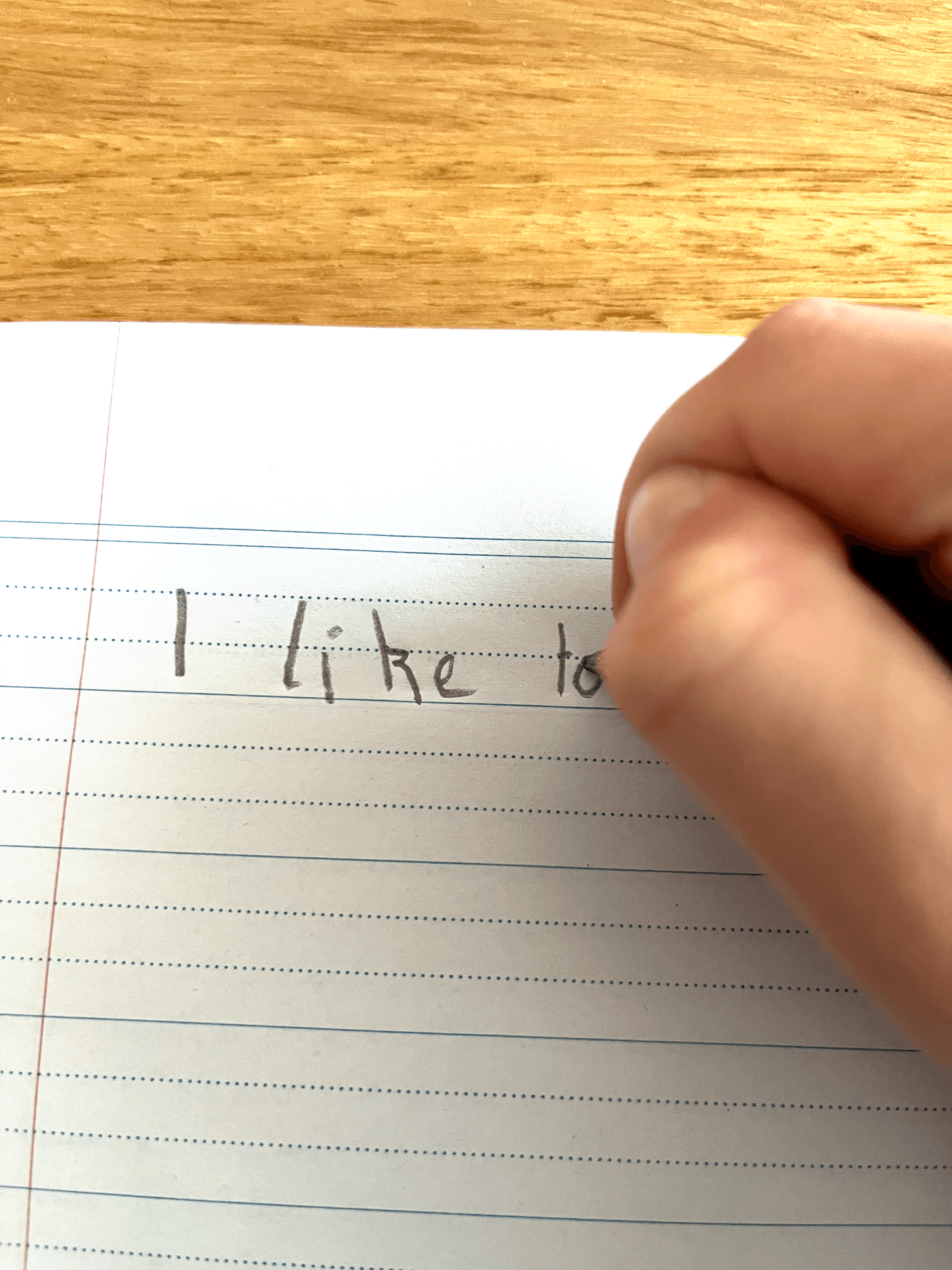
Last time, I wrote about the moment that started all of this: the child who wants to write, has an idea ready to go, and then freezes as soon as the pencil is in their hand.
I said I'd come back and explain what might be happening in that moment, because understanding cognitive load changed the way I approached writing instruction.
Think of it like a bucket
Researchers use the term cognitive load to describe the amount of information our working memory is trying to manage at one time.
Working memory is limited, especially when we're learning something new. One way to picture it is as a small bucket. When too many things are poured in at once, it becomes much harder to process anything else.
Now think about what we ask of a five or six-year-old when we say, "Write me a sentence."
They need to hold an idea in their head. Choose the words. Remember how each word is spelt. Form each letter correctly. Keep the letters on the line. Leave spaces. Start with a capital letter. Finish with a full stop. And somehow keep hold of their original idea while doing all of that.
That's not one task. It's a collection of smaller tasks, all competing for the same limited space.
I've sat beside children who could tell me a whole sentence aloud, then write three words and look up because the rest had disappeared. They hadn't run out of ideas. They were concentrating so hard on forming the letters or working out a spelling that they lost the sentence they'd been holding in their head.
It can look as though they've got nothing to write. Really, there just isn't room left to hold it.
Why adding more practice can backfire
When a child is struggling to write, our instinct is often to give them more practice with the whole task.
Another sentence. Another worksheet. Another attempt at the same piece of writing.
But repeating the whole task doesn't address what's making it difficult. A child may understand exactly what they want to say and still feel overwhelmed by the number of things they have to manage at once.
Effort usually isn't what's missing. The child needs fewer things competing for their attention.
Practice still matters. What matters just as much is being deliberate about what a child is actually practising.
Instead of asking them to manage handwriting, spelling, punctuation and sentence construction all at once, we can separate those skills and give each one some focused attention.
The hidden cost of busy screens
It's worth naming what a lot of children's apps get backwards. The game is the main event, and the learning is squeezed into the gaps between it.
Pop the balloons, feed the character, win the level, and somewhere in there, do a bit of phonics to earn your way back to the fun.
The child isn't really there to learn. They're there to play, and the learning becomes the toll they pay between rounds. All of that flashing, noise and rewarding lands in the same bucket, and a child only has so much attention to spend.
We build it the other way round. The learning is the main event. Each activity is calm and uncluttered, so the limited attention a child has can go to the letter, the word or the sentence in front of them.
And yes, we celebrate. A child absolutely should feel proud when something clicks. But the celebration comes after the effort, and it points back to what they've just done rather than pulling their attention away from it.
What one step at a time actually does
When we reduce the number of things a child has to manage at once, they can put more of their attention into the skill they're learning.
That might mean focusing only on the shape of a letter. It might mean listening for the first sound in a word. It might mean practising one spelling pattern without also having to build a whole sentence.
As a skill becomes more familiar, it takes less conscious effort.
Think about reading. At first, a child may need to sound out every part of a word. With practice, most words start to feel automatic. They no longer take up the same room in their head.
Writing develops in a similar way. When letter formation becomes easier, there's more room for spelling. When spelling patterns become familiar, there's more room for building sentences. As each part becomes more secure, the child has more attention left for the idea they actually want to express.
This doesn't mean lowering expectations. It means giving a child enough room to meet them.
Why RethinkLit is built this way
This is why each RethinkLit activity has one clear focus.
We model the skill first, so the child can watch without having to produce anything yet. Then they practise with support before trying it on their own.
It's the familiar I Do, We Do, You Do structure, but broken into short, manageable steps.
The goal isn't to remove challenge. It's to make sure the challenge comes from the skill being taught, rather than from juggling too many unrelated demands at once.
When a child isn't trying to carry every part of writing at the same time, the task is far less likely to feel overwhelming. There's more room for them to think, practise, and feel themselves succeed.
What this can look like at home
Next time a child you love stalls over writing, try not to read it straight away as "won't" or "can't."
Ask whether they might simply be managing too many things at once.
You could let them say their idea aloud while you write it down. You could make spelling the only job for five minutes and set the handwriting aside. You could let one carefully formed letter be enough for today.
Breaking the task apart isn't doing the work for them; it's giving them a way to build each skill before using them all together.
More often than not, you'll see the spark come back. It wasn't gone. There just wasn't room for it.
That idea sits underneath many of the choices we've made in RethinkLit.
We start small, not because we expect less from children, but because smaller steps give them the room they need to succeed.
Ready to get started?
Every paid plan begins with a free trial. See how RethinkLit helps your child build writing confidence, one step at a time.
Start your free trial