Writing is one of the hardest things we ask a child to do.
Hold the pencil. Remember the letter shape. Hear the sounds inside the word. Choose which spelling is right. Find the words for the idea. And keep that idea in your head the whole time.
All at once. No wonder it falls apart.
Our first module, Letter Lab, takes the pencil and the shape off that list.
- Every stroke is modelled before the child attempts it, so the hand knows the movement before it has to produce it
- Dotted thirds show exactly where each letter sits, in your own state's handwriting font
- I Do, We Do, You Do: the child never writes a letter they have not seen made first, and the feedback keeps them willing to try the next one
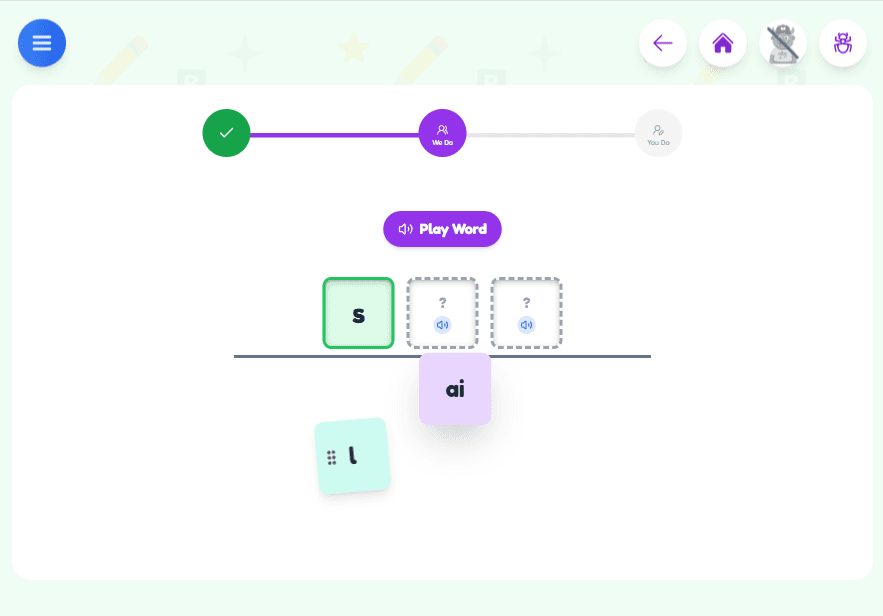
Then Word Lab takes the sounds and the spelling.
- Children break a word into the sounds they can hear, then drag each one into place, so spelling becomes a system to work out rather than a list to memorise
- Which letters spell which sound is made visible, so the pattern transfers to the next word instead of stopping at this one
- Systematic phonics, sequenced the way it is taught in evidence-based classrooms
Those two do not stay separate.
Letter Lab and Word Lab both feed into Listen & Write: the letters from one and the sounds from the other come together as a word the child writes from memory.
We built our own handwriting engine, so Listen & Write can read what the child actually wrote.
This is dictation. A word or a whole sentence is spoken once, and nothing stays on screen to copy.
- The child holds it, works out the sounds, picks the spelling and forms every letter by hand. All four demands at once.
- The engine reads the strokes they actually made, letter by letter. A reversed b or a missing middle sound is caught in the moment, not a week later.
- It moves with them. Keep getting words right and the next ones are harder, so the level follows the child rather than the label on their year.
- Teachers can put in their own words and sentences, so it runs the spelling list the class is already working on rather than a generic one.
- Every attempt is evidence: which letters, which sounds, which patterns keep tripping them up. What to practise next stops being a guess.
And the modules hand work to each other.
Finish a spelling pattern in Word Lab and it passes those exact words to Listen & Write, so the pattern gets written from memory instead of only sorted. And because Listen & Write checks every letter, a letter that keeps coming out wrong sends them to Letter Lab to practise forming it, then straight back to write the word again.
Once the words themselves hold, Grammar Lab makes sentence structure something they can see and move.
- Words are sorted into parts of speech by dragging them, so structure stops being a rule to recite and becomes a thing with shape
- Children find and fix run-ons themselves, which is the editing skill and not just the label
- Sentence types built up in order, explicitly taught rather than absorbed by chance
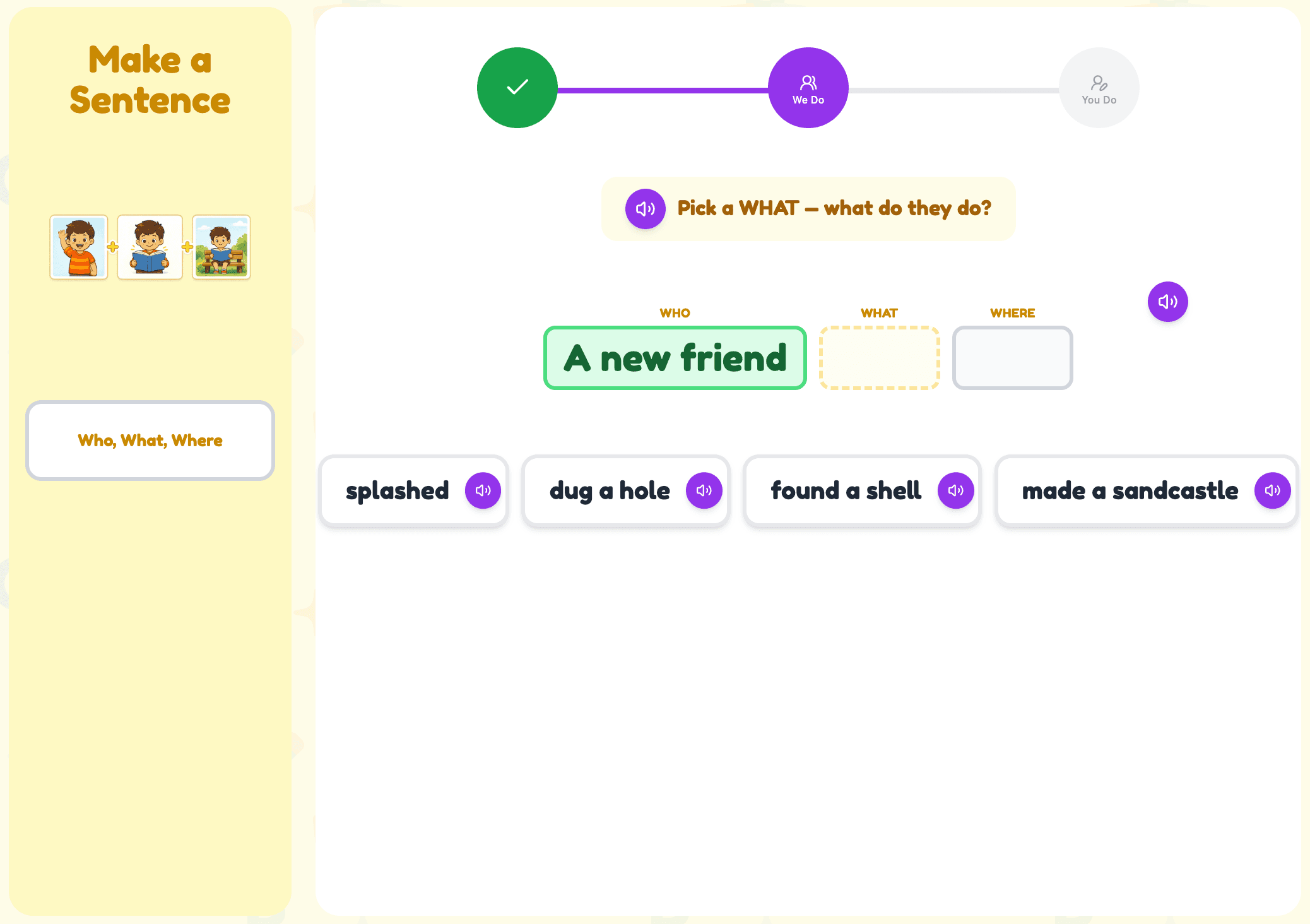
Once they can see the structure, Sentence Builder grows “The dog ran.” into something worth reading.
- Start with a plain sentence and add word cards: describing words, then joining words, then whole extra ideas
- Expression becomes something built a piece at a time, instead of a page they are told to fill
- Scaffolded from a modelled example to writing one of their own
One plain sentence, grown a piece at a time.
The big, scruffy dog ran across the park this morning.
Writing Studio takes the last two: finding the words, and holding on to the idea.
- The child says their idea out loud first, so a blank page never stops them before they have started
- Then they write it by hand, with letter-by-letter feedback as they go
- The idea is captured before the writing begins, so getting it down is no longer a race against forgetting it
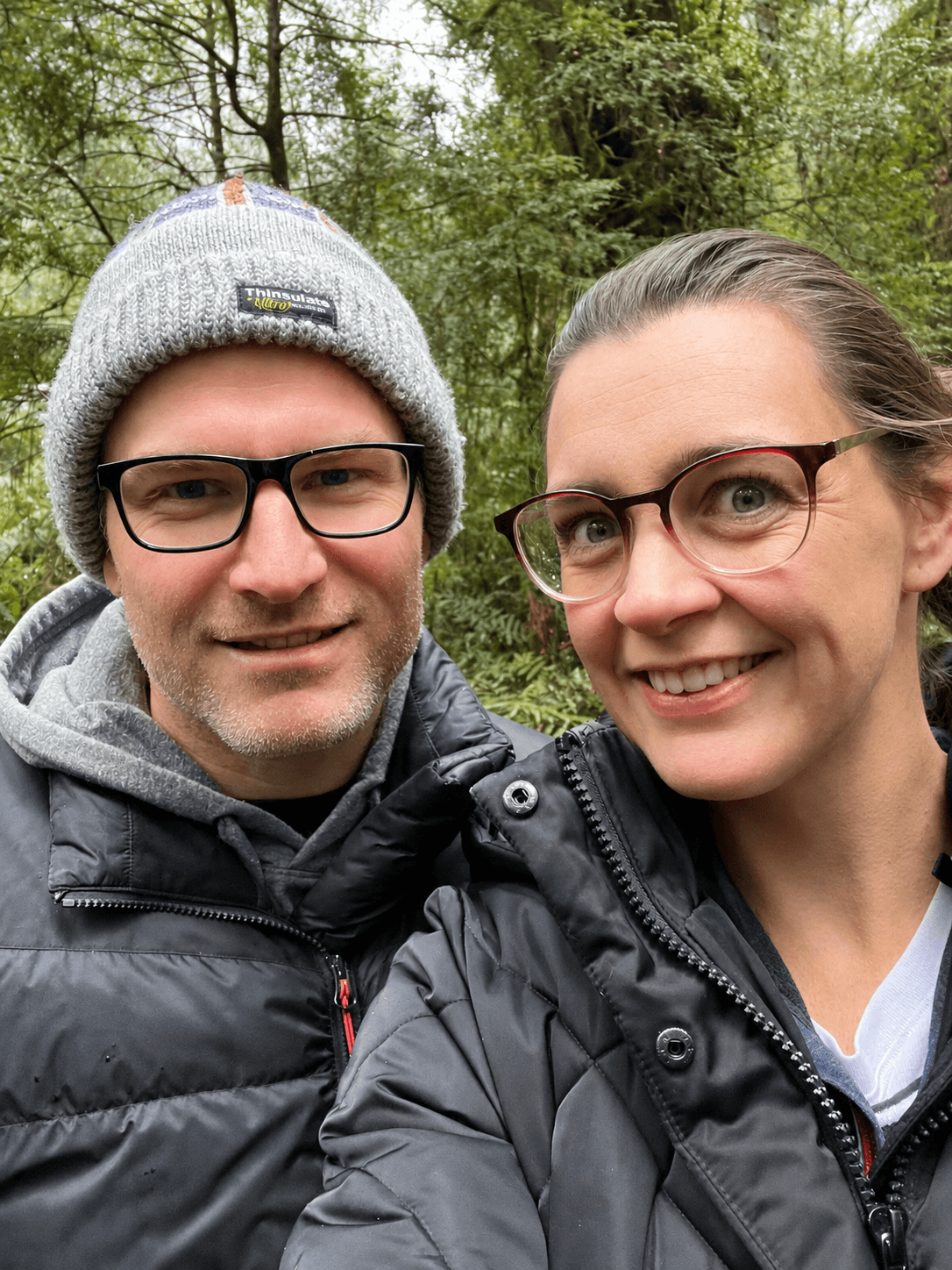
Darcy & Kirby, RethinkLit’s founders
All of it was made by the two of us, at the kitchen table.
Kirby is a primary school teacher. Darcy is a software engineer. Between them, that is the whole team.
Every lesson is written and sequenced by a teacher who does this work in a classroom, not bought in from a content library. Every module is built in house, including the handwriting engine that reads what a child actually wrote.
It is a small operation, and that is the point. What a child practises next is decided by someone who teaches children to write for a living.
Structured literacy, grounded in the science of reading. Applied to the writing side of it: sounds to letters, letters to words, words to sentences, explicitly and in order.
Children's data stays in Australia. Never sold, never used for advertising, never used for training.
No lesson here was generated. Every word a child reads was written by a teacher, not produced by a language model.
Writing stops being one of the hardest things we ask a child to do.

Six modules on one path, from holding the pencil to writing an idea that is entirely their own, plus reporting that shows you exactly what improved and what to work on next.
Loved by families & teachers
We looooooove RethinkLit
I love how it sounds out each letter when spelling a word.
Since trialling RethinkLit with my 4yo and 7yo I have seen a marked improvement in their comprehension and also their confidence in their writing and reading. Couldn't recommend it more.