Our Story
About RethinkLit
A teacher and an engineer, building the literacy practice they wanted for their own kids, and yours.
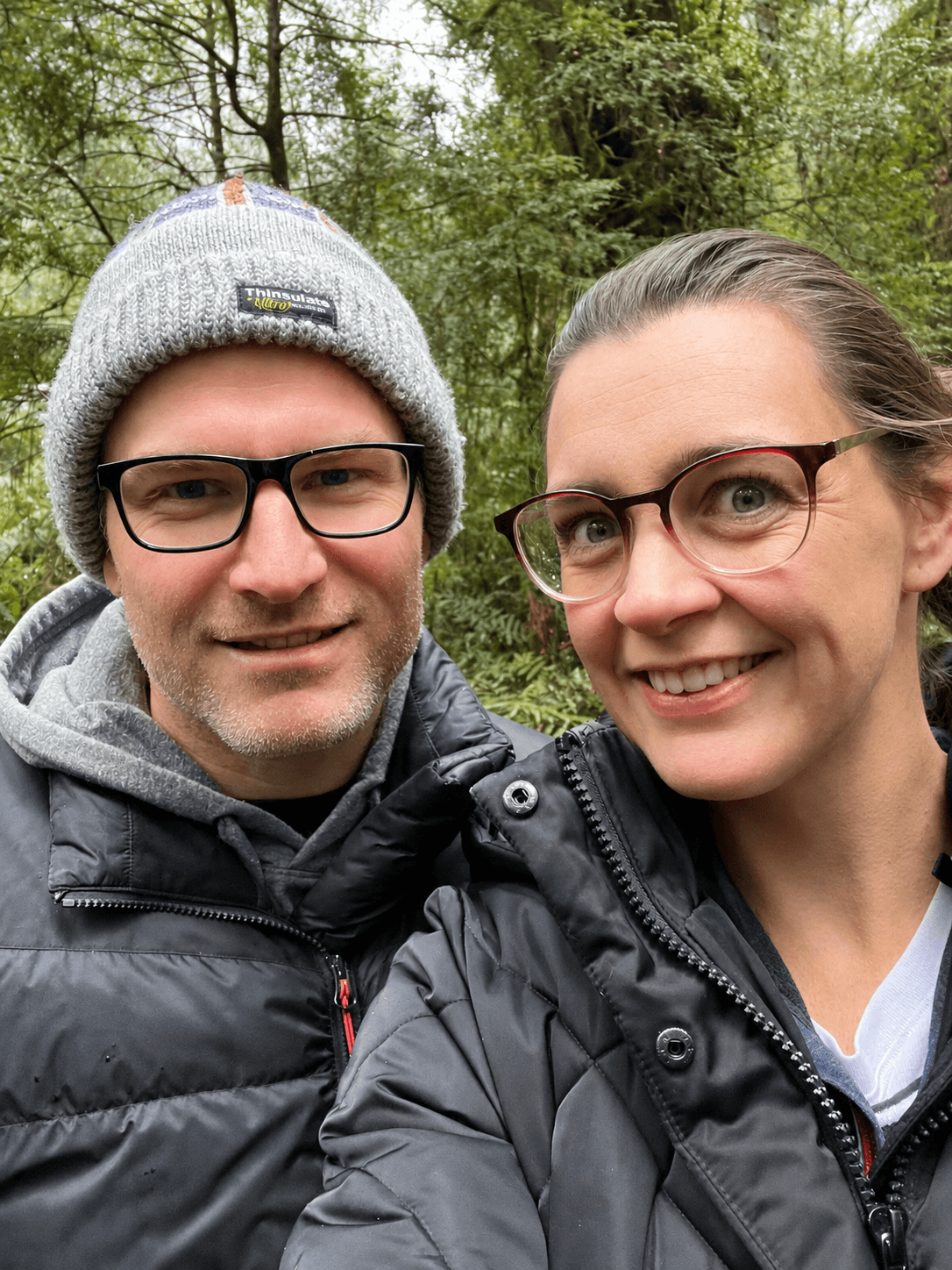
Darcy & Kirby, RethinkLit’s founders
How it started
RethinkLit started at the kitchen table. Kirby is a primary school teacher. She sees every day how children can struggle with writing, and what helps when the right support is in place. Darcy is a software engineer who believed that support could be made easier to reach, and easier for a child to keep up.
They built the first version for their own children: something calm, structured and grounded in how children actually learn, with nothing on the screen that is not part of the lesson.
RethinkLit has since grown into six modules, every lesson written and sequenced by a teacher who does this work in a classroom. The heart of it has not changed: two parents who wanted something better for their kids, and decided to make it.
Read the full story →Made for the whole learning journey
One calm, focused space for a child to practise in, and the same clear picture of progress for everyone supporting them.
Students
A calm place to practise letters, spelling, grammar and writing, one step at a time.
Parents
Progress reports that are easy to read, so you can support learning at home with confidence.
Teachers
A clear view of every learner, using the same language as home.
Our Approach
Grounded in Structured Literacy
Every child deserves to become a confident reader and writer, and that happens when reading and writing are taught explicitly and systematically. RethinkLit is built on structured literacy, an approach grounded in the Science of Reading: decades of research from psychology, linguistics and neuroscience into how children actually learn.
Phonemes
The smallest sounds in words, such as /s/, /a/ or /t/.
Graphemes
The letters or groups of letters that represent those sounds.
Blending & Segmenting
Joining sounds to make words, and breaking words apart to spell them.
Orthographic Mapping
Connecting each sound to its letters so a word is stored for good. Spelling and writing words by hand builds these links.
Our lessons follow an “I Do, We Do, You Do” scaffold, moving from a clear model to independent practice.
The science
Reading and Writing Grow Together
Writing is not a skill bolted on after reading. The two reinforce each other: children who spell and write by hand remember letters and sounds more durably, and writing deepens the very sound to letter knowledge that makes reading automatic.
When transcription becomes automatic, working memory is freed for the ideas themselves. That is why RethinkLit builds handwriting and spelling fluency first, so composition has room to grow.
Transcription
Handwriting and spelling becoming automatic, so the child is not fighting the mechanics of getting words down.
Composition
Turning ideas into sentences and paragraphs once transcription no longer competes for attention.
Gradual Release
“I Do, We Do, You Do”, shifting responsibility from the model to the independent writer.
Sentence Expansion
Building from a simple base sentence to richer, more expressive writing.
One thing at a time
Learning to write is one of the most cognitively demanding tasks a young child faces, with letters, sounds, spelling and ideas all competing for attention at once. RethinkLit breaks learning into clear, manageable steps and keeps each activity on a single skill, so children build confidence gradually without becoming overwhelmed.
Why one thing at a time changes everything →Where we stand on screens
We still believe in the pencil.
Children learn to write with a pencil in their hand and paper under it. Nothing about RethinkLit changes that. We built it to sit alongside paper, not in place of it: a few minutes of practice that feeds straight back into the pencil work.
So why build RethinkLit? Because there is one thing neither a parent at the kitchen table nor a teacher of twenty-five can do: watch every letter form, check every attempt, and hand the child a different sentence next, pitched to exactly where they are. In a class, everyone writes the same dictation sentence whatever their level. At home, a parent cannot always tell which sound their child has not yet been taught. Giving each child their own is the one honest reason to reach for a device.
That is the test we hold ourselves to. A screen earns a few minutes of a child’s day only when it does something a pencil and a teacher could not do at the same time. Here is how we answer it.
Is it on for one defined purpose?
One skill per activity, chosen by a teacher. The iPad comes out for the practice, then goes away.
Does the child do the work, or watch?
Both, but mostly the work. Most lessons open with a short model, every time, then the child takes over: listening, forming the letters, spelling the word. Listen & Write and Writing Studio start with the child straight away. The screen never does the work for them.
Is a letter formed by hand, or a key pressed?
When a child is learning to write, every letter is formed by hand with a finger or stylus, using the strokes and sequence they will use on paper.
Does it end on its own?
A session is a short set of words or sentences, and it finishes when the last one is done. No streaks, no autoplay, no feed, no ads.
Can an adult see what happened?
Every attempt is kept letter by letter, so a parent or teacher can see what the child wrote, not just a score.
Then the iPad goes away, and the child picks up a pencil. What they practised on RethinkLit is the same letter, formed the same way, so it carries straight across to the page.
Our line
And what we will not do
No games, streaks or rewards for time spent.
Nothing on the screen is designed to keep a child there. The practice is the point, and when it is done, it is done.
No ads and no tracking in the child area.
A child sees the lesson and nothing else. No promotions, no third-party trackers, nothing that follows them around the web.
No third-party AI touches a child’s writing.
Handwriting recognition is our own model, running on our own servers. A child’s writing is never sent to an outside AI service.
Why it matters
When instruction lines up with how the brain learns, children do not just memorise words. They understand how language works. Our mission is simple: to make evidence-based literacy practice clear and affordable for families and classrooms. We aim to make RethinkLit usable for a wide range of learners, and we keep working to improve its accessibility.
Get in Touch